 Arabic
  English

How Does the Vertex University Experience Align with the Requirements of the Modern Labor Market?
Digital transformation has become a decisive factor in reshaping the labor market. Its impact is no longer limited to the tools in use or the types of available jobs recruitment criteria; rather, it has extended to the very concept by which professional competence is assessed. Within this context, employers’ perspectives on graduates have evolved, with increasing emphasis placed on the ability to operate within dynamic digital environments that demand independence in performance, rapid learning, and a conscious understanding of modern technologies.
This reality has compelled educational institutions to reconsider their traditional roles and move beyond a sole focus on theoretical knowledge toward building educational experiences that resemble contemporary work environments in both structure and logic. From this perspective, electronic universities—including Vertex University—can be understood as educational models that develop within the modern professional context and align naturally with labor market transformations, without artificial positioning or detachment from solid academic foundations.
How Has the Concept of Professional Readiness Evolved?
In earlier employment models, the university degree served as a primary indicator of competence, accompanied by the assumption that practical skills would be acquired later in the workplace. This assumption no longer holds the same weight. Today, institutions—particularly within digital sectors—seek graduates who are capable of rapid integration, who understand professional contexts, and who can manage job requirements without prolonged onboarding periods.
Within this framework, the educational model at Vertex University provides an integrated digital environment that places students within this reality from the very beginning of their academic journey. Learning occurs within a system that closely resembles modern work environments in terms of interaction patterns, task management, and the use of digital platforms, contributing to the gradual development of professional readiness through the educational experience itself.
Self-Discipline and Contemporary Performance Standards
The concept of discipline has undergone a clear transformation within modern work environments. It has become associated with time management, commitment to outcomes, and individual accountability, rather than physical presence or direct supervision. In digital environments, competence is measured through the clarity and quality of results, not through constant monitoring of daily activities.
The study experience at Vertex University is grounded in this understanding, as students assume responsibility for organizing their time, meeting academic requirements, and balancing educational and personal commitments. This learning model reinforces professional behavior aligned with contemporary institutional expectations and provides students with practical experience in managing responsibilities independently.
Automation and the Transformation of Job Functions
Automation has led to the redefinition of many job roles’ recruitment criteria, with routine tasks increasingly handled by digital systems, while human roles have shifted toward oversight, analysis, and decision-making. This transformation has made understanding the logic of digital systems a professional necessity rather than an additional technical skill.
The digital learning environment at Vertex University offers continuous engagement with learning management systems, electronic platforms, and automated organizational tools. This engagement enables students to develop a practical understanding of automated systems, narrowing the gap between academic study and modern job recruitment criteria and supporting adaptability within automation-driven work environments.
Artificial Intelligence and New Standards of Recruitment Criteria
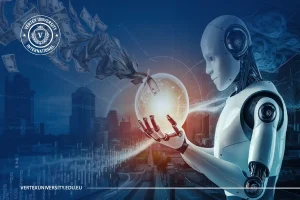
Artificial intelligence has become a tangible presence across multiple sectors, contributing to shifts in the nature of skills demanded by the labor market. The emphasis is no longer placed on memorization, but on analysis, interpretation, and effective collaboration with intelligent tools that evolve continuously.
The digital educational experience at Vertex University prepares students to engage with this reality through research-based learning, analytical thinking, and the use of digital platforms as supportive academic tools. This approach strengthens students’ ability to interact with artificial intelligence technologies with confidence and awareness, integrating them naturally into their future professional practice.
Remote Work and Freelancing in the Contemporary Labor Market
Remote work and freelancing have become prominent features of the modern labor market, particularly within digital sectors. This shift has introduced new recruitment criteria related to clarity of communication, independent work capacity, and project management without physical presence.
Students at Vertex University acquire practical exposure to these work patterns through virtual classrooms, collaborative digital projects, and continuous communication via electronic platforms. This exposure contributes to a practical understanding of modern work dynamics, whether within institutional settings or independent professional pathways.
Continuous Learning and Professional Sustainability
The contemporary labor market requires ongoing learning and skill development in response to accelerating technological change and evolving job demands. Employers therefore seek individuals who demonstrate continuous readiness to acquire new skills and update their knowledge in a structured and self-directed manner.
The educational philosophy at Vertex University reflects this orientation by encouraging research, exploration, and continuous knowledge development within a clear academic framework. This approach aims to prepare graduates capable of lifelong learning, recognized as one of the most critical elements of professional stability in the era of digital transformation.
Vertex University and a Vision for Future-Oriented Education
Vertex University’s vision is rooted in a deep understanding of labor market transformations and seeks to deliver an educational experience aligned with the requirements of the digital professional environment, while maintaining rigorous academic standards. Education within this framework is viewed not as a phase separate from professional reality, but as an integrated pathway that begins in the virtual classroom and extends into the labor market.
Through this approach, Vertex University prepares its students to engage with a changing professional landscape with confidence and competence, positioning the educational experience at the core of professional readiness as the starting point toward a sustainable career future.