 Arabic
  English
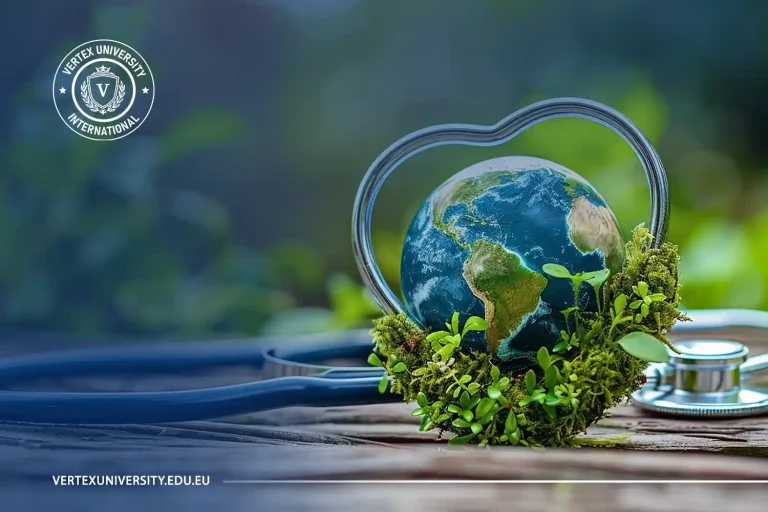
World Health Day in Brief
On April 7 each year, World Health Day re-emerges as a moment of collective awareness that goes beyond the symbolism of celebration to question the global health reality and explore more efficient and equitable pathways to protecting human life.
This day, established by the World Health Organization to commemorate its founding in 1948, is no longer merely a seasonal occasion, but has become a knowledge platform through which public health priorities are reshaped in response to rapid changes in lifestyles, environmental challenges, and scientific advancement.
The 2026 theme, “Together for Health… Support Science,” reorders the relationship between health awareness and scientific knowledge, emphasizing the need to build a real capacity to understand scientific evidence and invest it in developing health policies, improving quality of care, and efficiently directing resources. Here, science shifts from being a source of knowledge to an invisible infrastructure through which modern health systems are managed.
Science, Environment, and Health: An Integrated System
Diseases are no longer understood in isolation from their environmental contexts, and health interventions are no longer effective unless they are grounded in a multidisciplinary understanding where data integrates with scientific research and its outcomes are translated into actionable practices. This transformation explains why global efforts are increasingly directed toward strengthening collaboration among research institutions, policymakers, and the health sector as the shortest path toward more resilient and sustainable health systems. This vision gains further depth with the growing global focus on the “One Health” approach, which reconnects human health with animal and environmental health within an integrated framework that reflects the complexity of the modern world.
The College of Health and Environmental Sciences at Vertex University: Toward Education that Creates Change
Vertex International University stands out as an academic actor that recognizes that investing in health begins with investing in knowledge. The university views health education not as a narrow specialization, but as an integrated project to reshape the relationship between humans and their environment through scientific empowerment that combines theory and practice.
This vision cannot be complete without highlighting the scientific foundation that shapes and sustains it. Here, the College of Health and Environmental Sciences at Vertex University emerges as one of the pillars supporting this direction. The college contributes to building a professional mindset capable of interpreting health transformations through a precise scientific lens and engaging with them flexibly and innovatively.
The pride expressed by the university in its academic staff is not merely celebratory, but rather a recognition of their role in producing knowledge, guiding it, and transforming it into added value that impacts individuals and communities. As no discussion of the future of health is complete without addressing its professional pathways, the college offers an educational model aligned with global market needs, featuring specializations that are increasingly in demand, such as health administration, emergency and disaster health management, digital health, and health information technology.
These programs are delivered through an advanced digital learning environment via the university’s interactive platform, in live lectures supported by modern simulation technologies, ensuring a transition from theoretical understanding to real professional readiness. This model of education not only provides flexibility, but also creates a learning experience closer to real-world practice, under the supervision of distinguished international academics and experts, enhancing graduates’ competitiveness at both regional and global levels.
The True Value Lies in Education that Meets Aspirations and Serves Diverse Communities
For students aspiring to a clearly defined professional future, choosing a specialization is a strategic investment. The modern health disciplines offered by the college place students at the center of this transformation, where technology intersects with management and data informs decision-making. For professionals in the health sector, experience alone is no longer sufficient in an environment that requires continuous skill development; the college’s programs represent an opportunity for knowledge renewal aligned with transformations in healthcare management, digital transformation, and crisis response.
This also extends to policymakers and those interested in health policies, as this educational model provides a practical vision of how education can serve as a real reform tool by preparing competencies capable of linking strategic planning with field implementation.
For those concerned with sustainability and the environment, the “One Health” approach opens a new horizon for understanding the relationship between humans and their surroundings, a vision clearly reflected in the philosophy and programs of the college. In this context, the university launched a free training course titled “Hospital Management and Sustainable Health Development,” reflecting a conscious awareness of the need for healthcare institutions to adopt administrative models that balance operational efficiency with long-term sustainability.
Celebrating World Health Day at Vertex University thus becomes an entry point for rethinking our individual and institutional roles in building a more balanced and healthier future. While the world calls for supporting science, Vertex University offers a practical model of how this support can be transformed into education, education into impact, and impact into a tangible improvement in quality of life.