 Arabic
  English

At the Beginning of the academic year, the first week gives students an important opportunity to understand the academic year ahead before its requirements begin to accumulate. During this period, students become familiar with their courses, the way each professor presents the material, assignment and examination dates, and the assessment methods used throughout the semester. The earlier this picture becomes clear, the more organized the student’s approach to the semester can be.
At Vertex International University, learning is supported by a range of tools that students use throughout the academic year. These include the university platform, live interactive lectures, recorded sessions, communication with faculty members, academic advising, Student Affairs, and the training resources provided by the university. Knowing these channels is part of knowing the university itself, while using each one at the right time can make a direct difference to the student’s academic experience.
The live lecture is the starting point for studying a course
A recording may preserve the content of a lecture, but attending it live gives the student something more: the context in which the explanation takes place.
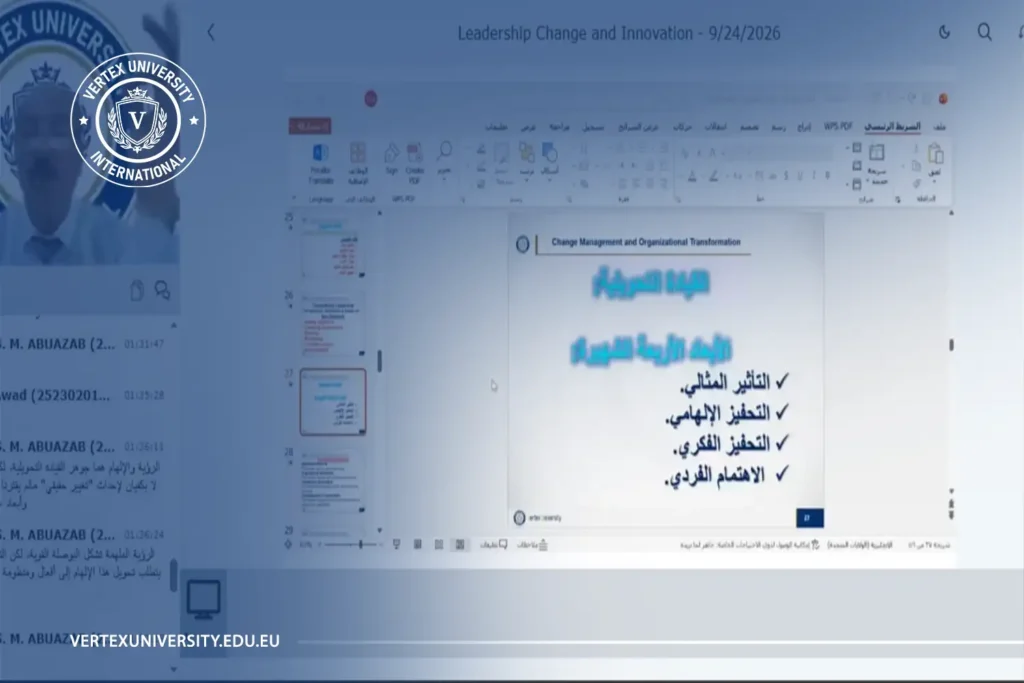
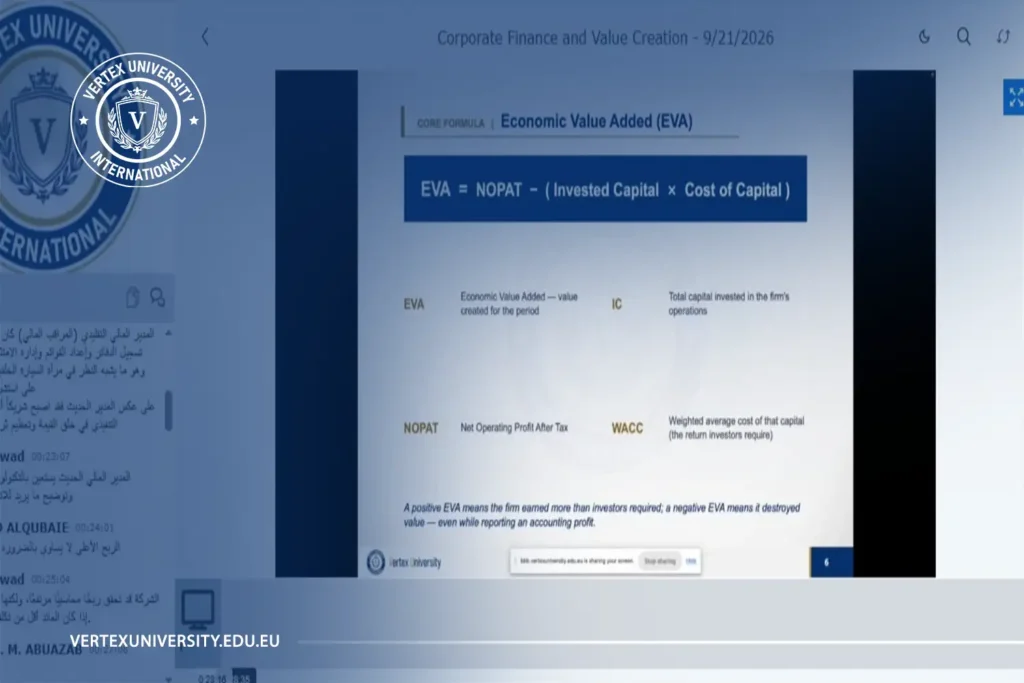
Students listen as the professor explains a concept and then connects it to an example or a case study related to the field of study. During the lecture, they can ask about a point they have not fully understood, comment on an idea, or follow a discussion that opens another aspect of the subject. This interaction brings the material closer to understanding and discssion rather than simple reception of information.
For this reason, Vertex’s interactive lectures combine explanations of key concepts with relevant applications, while giving students opportunities to ask questions, discuss their ideas, and engage with practical situations.
Recordings serve a different purpose within the learning process. Students can return to them to review a particular explanation, revisit part of a lecture before an examination, or catch up on material they missed because of an unexpected circumstance.
The best use of recordings begins with understanding their role. The live lecture is a space for participation, while the recording is a resource the student can return to when a concept needs to be reinforced.
Questions raised during the lecture reveal what requires further study
One of the habits that can make a meaningful difference in university study is the ability to ask a question at the right moment.
A concept may seem clear during the explanation, then reveal a small gap when the student tries to apply it to an example. A student may also understand the general requirements of an assignment while needing clarification about a specific part before beginning. Asking at that point can save time that might otherwise be spent trying to resolve the issue alone.
The student also does not need to wait for a major question before participating. A brief observation about an example or a comment on a case study can sometimes become the starting point for a useful discussion.
Participation gives students a practical opportunity to test their understanding. When a student explains an opinion or discusses a case related to the field of study, it becomes easier to recognize which parts of the subject are clear and which require further reading. Vertex’s student-focused materials highlight the value of participation, expressing ideas, analyzing cases, and taking responsibility for academic tasks.
Over time, speaking during lectures becomes part of the student’s practice in thinking and communicating—skills that remain valuable beyond university study as well.
Academic advising becomes more useful when the student arrives with a specific question
An academic plan may appear clear on paper, yet some of its decisions require closer consideration. Course registration, academic progress, upcoming requirements, or reviewing the direction of a study plan are all matters worth discussing with an academic advisor.
This is where academic advising becomes valuable.
The student enters the meeting with a study plan, completed courses, and questions about the next stage of study. The clearer the student’s understanding of their current academic position, the more focused the discussion can become.
Vertex provides channels for communication with academic advisors alongside faculty members and Student Affairs, helping students identify the appropriate point of contact when they need guidance or follow-up.
Knowing which university office to contact can save students considerable time
Throughout the academic year, students encounter situations involving university procedures and services. The professor or another student may not always be the appropriate source for an answer.
Students therefore benefit from knowing the communication channels for Student Affairs and the offices responsible for university services and procedures from the beginning of the year. Seeking information from an official source places the answer in its proper context, particularly when a procedure involves specific steps or requirements.
This knowledge may seem minor at the beginning of the academic year, yet it becomes valuable when the student needs to complete a procedure or ask about a service. Vertex’s student communication materials emphasize the availability of clear channels for inquiries and follow-up alongside academic advising and communication with faculty members.
The Student Guide is more than something to read once and forget
The Student Guide for the 2026–2027 academic year contains information that students may need at different stages of their university experience. It covers academic regulations, student rights and responsibilities, registration, add/drop, deferment and withdrawal procedures, academic performance, GPA and grades, advising and support services, and official channels for inquiries.
Having this information in one place saves students from searching randomly whenever they encounter a procedure or need to understand a particular right or responsibility.
Students may find it useful to keep a copy of the guide on their phone or computer and refer to it before submitting an inquiry, especially when the question concerns a documented academic regulation or procedure. With repeated use, the guide becomes a practical reference for managing university affairs.
The ideal study begins with how the student uses its tools
The concept of a digital university can sometimes be reduced to having a study platform, while the actual experience extends further. Courses are connected to the platform, interactive lectures are conducted, recordings, learning materials, assignments, and assessments are made available, and students can communicate with academic and administrative offices through designated channels.
This matters because students do not interact with a single tool at the beginning of the week and then leave it behind. Their studies extend across connected tools, each serving a particular function within their academic routine.
This is where organization becomes important. Students can attend a lecture, return to its recording, complete an assignment, review academic information, and contact the appropriate office when necessary. This flexibility gives students greater room to organize their studies, while requiring consistent use so that academic requirements remain visible in their schedules.
Students benefit from treating the university platform as part of their regular academic routine rather than a place they visit only when an examination approaches.
Some of the knowledge students need can be found beyond the course itself
Vertex International University’s YouTube channel offers training materials for students, researchers, and professionals. Its published content includes topics such as the risks of using artificial intelligence in programming, academic writing, and detecting plagiarism and academic misconduct.
These resources become more useful when students select content that relates to their current needs. A student writing a research paper can look for material that supports the research process, while a student in a technical field can follow content connected to a particular academic or technical need.
In this way, additional content becomes a resource that students use to address a specific need or acquire a useful skill, rather than simply another piece of material to watch and move on from.
Students who work and study need to see the whole week ahead
Planning becomes particularly important when students combine employment with university study. Waiting for free time to study leaves academic tasks dependent on whatever remains of the day, and that space is often smaller than the work requires.
A better approach is to look at the week before it begins and decide when work, lectures, study sessions, and assignments will take place. A major task that requires several sessions can be distributed across the week, while an approaching assignment should appear in the schedule several days before its deadline.
This does not mean turning the week into a schedule packed with every minute. The purpose is to understand how much time is actually available and then distribute it according to academic priorities and other responsibilities.
Digital study at Vertex provides useful flexibility for this kind of organization, particularly for students whose studies are combined with work or other commitments. That flexibility becomes more valuable when students give it a clear place within their weekly schedule.
A short weekly review can prevent small problems from growing
At the end of each week, students benefit from taking a brief look at what they have accomplished. Which course needs more review? Is there an assignment that was started late? Has a point remained unclear? Is it time to contact the professor or academic advisor?
These questions do not require a long review session. A few minutes can be enough to create a realistic picture of the week ahead.
The result may be simple: watching part of a lecture again, setting aside an additional hour to read a reference, or sending an inquiry before an issue turns into a delayed assignment. This keeps academic follow-up within the rhythm of the semester rather than postponing it until the end of the term.
What Vertex wants its students to focus on at the beginning of the academic year
The value of university study grows when students know how to use what the university provides. Attending a lecture creates an opportunity for interaction, recordings support review, questions open discussion, academic advising supports academic decisions, Student Affairs provides guidance on procedures and services, the Student Guide puts regulations within reach, and training content extends learning beyond the course itself.
These resources become more valuable when students use them consciously and at the point when they are needed. With this habit, the academic year becomes a series of deliberate decisions through which knowledge, experience, and confidence in managing an academic path gradually grow.
At the beginning of the academic year, Vertex offers its students a practical principle: treat your studies as a daily responsibility that can be managed and reviewed. Attend your lectures, take part in discussions, ask your professor when you need clarification, follow your academic plan, know your university’s communication channels, and make use of the platform and resources available to you. Then, at the end of each week, look back at what you have accomplished and identify what deserves your attention in the week ahead.